
Arduino vs Raspberry Pi vs ESP32: Which Embedded Systems Platform Should Engineers Learn in 2026?
The embedded systems industry is experiencing unprecedented growth. From smart home devices and wearable technology to automotive control units and industrial automation, embedded programming sits at the heart of modern hardware innovation. If you are an engineer, electronics enthusiast, or IT professional considering a move into this domain, you have likely encountered three names repeatedly: Arduino, Raspberry Pi, and ESP32. But which one should you invest your learning time in for maximum career impact?
This guide breaks down each platform's architecture, capabilities, ideal use cases, and career relevance — helping you make an informed decision that aligns with your professional goals in 2026.
Why Embedded Programming Skills Matter More Than Ever in 2026
The global embedded systems market is projected to surpass $116 billion by 2026, driven by the explosive growth of IoT devices, autonomous vehicles, smart manufacturing, and edge computing. Engineers who understand embedded programming are no longer confined to niche hardware roles — they are central to product development across automotive, healthcare, consumer electronics, and telecommunications sectors.
Whether you are looking to transition careers, expand your engineering skill set, or pursue specialised certifications, choosing the right platform to learn on shapes the kinds of projects you can build and the roles you can realistically pursue. Let us examine each of the three leading platforms in depth.
Arduino: The Microcontroller That Started a Revolution
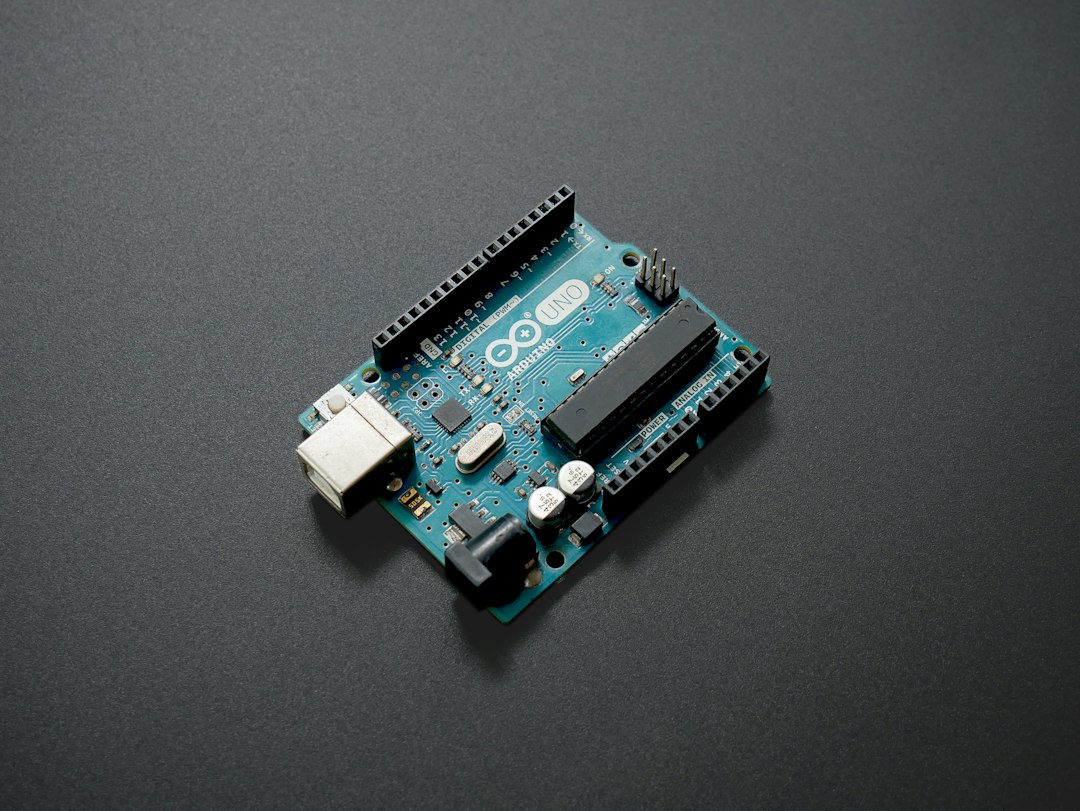
Launched in 2005 as an open-source hardware project, Arduino democratised embedded programming. It runs on AVR-based microcontrollers (and more recently ARM Cortex-M), offering a simplified programming environment based on C/C++. The Arduino IDE strips away much of the complexity that traditionally made microcontroller programming intimidating, making it the de facto entry point for millions of learners and professionals worldwide.
Key Characteristics of Arduino
- Language: Simplified C/C++ using the Arduino framework
- Processor: 8-bit AVR (Uno) or 32-bit ARM Cortex-M (Due, Zero, MKR series)
- Connectivity: No built-in Wi-Fi or Bluetooth on standard models; requires add-on shields
- Power Consumption: Very low — well suited to battery-operated prototypes
- Best For: Beginners, hardware control tasks, sensor interfacing, robotics education, rapid prototyping
Arduino's greatest strength is its simplicity and its community. You can have an LED blinking or a temperature sensor reading data within minutes of unboxing the board. Its massive ecosystem of libraries, tutorials, and compatible hardware shields makes the learning curve remarkably gentle. However, Arduino's processing power is limited. Complex data processing, running operating systems, or handling network-heavy applications are beyond its scope without significant workarounds or companion hardware.
For professionals in robotics education, industrial automation prototyping, or product development labs, Arduino remains an invaluable tool for quickly validating hardware concepts before committing to a more complex implementation.
Raspberry Pi: Linux-Powered Single-Board Computing
Raspberry Pi is not a microcontroller — it is a single-board computer (SBC). This is a critical distinction that many beginners overlook. While Arduino runs bare-metal firmware code directly on hardware, Raspberry Pi runs a full Linux-based operating system (typically Raspberry Pi OS). It is powered by ARM Cortex-A processors, giving it enough computing power to run desktop applications, host web servers, process video streams, and even execute lightweight machine learning inference at the edge.
Key Characteristics of Raspberry Pi
- Language: Python, C, C++, Java, Node.js, and virtually any language supported by Linux
- Processor: 64-bit ARM Cortex-A quad-core (1.8 GHz on Pi 4 Model B)
- Connectivity: Built-in dual-band Wi-Fi, Bluetooth 5.0, Gigabit Ethernet, HDMI, USB 3.0
- Power Consumption: Higher than microcontrollers — requires a stable 5V DC supply
- Best For: Linux learning, edge AI/ML inference, IoT gateways, network tools, media centres, kiosk displays
Raspberry Pi shines in scenarios that require a full operating system, rich connectivity, or significant data processing. It bridges the gap between embedded systems and conventional software development, making it invaluable for projects such as network monitoring tools, smart home hubs, computer vision pipelines, industrial data loggers, and digital signage systems. The trade-off is higher power consumption and boot time, which can be a drawback in hard real-time control applications where microsecond responsiveness is required.
For working professionals already familiar with Linux or Python, the Raspberry Pi ecosystem provides a fast and familiar on-ramp into hardware development. Many corporate IT teams deploy Raspberry Pis for network diagnostics, thin-client terminals, and lightweight server applications — making this platform relevant well beyond traditional embedded engineering roles.
ESP32: The IoT Powerhouse at an Unbeatable Price
Developed by Espressif Systems, the ESP32 is arguably the most disruptive platform to emerge in the embedded world over the last decade. At its core, it is a dual-core 32-bit microcontroller based on the Xtensa LX6 architecture, but what sets it apart from every other option in this guide is its built-in Wi-Fi (802.11 b/g/n) and Bluetooth (Classic and BLE 5.0) — all at a unit cost of under five dollars.
Key Characteristics of ESP32
- Language: C/C++ via Arduino IDE or the native ESP-IDF framework; also supports MicroPython
- Processor: Dual-core 32-bit Xtensa LX6 at up to 240 MHz
- Connectivity: Built-in 2.4 GHz Wi-Fi + Bluetooth Classic / BLE 5.0
- Power Consumption: Low with deep-sleep modes for battery-powered IoT devices
- Best For: IoT devices, wireless sensor networks, smart home products, industrial telemetry, wearables
The ESP32 occupies a uniquely valuable middle ground: it offers far more processing power and built-in wireless connectivity than Arduino, while remaining a true microcontroller without the overhead of a full operating system. This makes it exceptionally well suited for connected embedded applications — smart thermostats, remote sensor nodes, industrial telemetry transmitters, and low-power wearables that need to push data over Wi-Fi or Bluetooth to cloud platforms.
For engineers focused on the Internet of Things, the ESP32 has rapidly become the industry standard at the prototyping and small-batch production level. Major cloud platforms including AWS IoT Core, Google Cloud IoT, and Microsoft Azure IoT Hub provide official ESP32 SDKs and integration libraries, making the path from prototype to commercial IoT deployment significantly shorter and more structured.
Head-to-Head Comparison: Which Platform Wins in Each Category?
To make your decision easier, here is how the three platforms compare across the dimensions most relevant to working professionals and career learners.
Learning Curve
Arduino wins for absolute beginners with no prior hardware experience. Its simplified IDE and language abstractions build confidence quickly. ESP32 is a close second and is approachable for anyone with basic Arduino experience. Raspberry Pi has the steepest initial setup curve but becomes highly intuitive for developers already comfortable with Linux or Python scripting.
Processing Power
Raspberry Pi is the clear leader, delivering desktop-class computing performance in a credit-card-sized board. ESP32 handles moderate computational tasks effectively with its dual-core 240 MHz processor and hardware crypto accelerators. Classic Arduino (AVR-based) is the weakest in raw processing but remains perfectly sufficient for the majority of control, sensing, and actuation tasks it is designed for.
Wireless Connectivity
ESP32 leads decisively for wireless-native development, with Wi-Fi and Bluetooth built directly onto the chip. Raspberry Pi offers the broadest connectivity portfolio overall including Wi-Fi, Bluetooth, Gigabit Ethernet, USB 3.0, and HDMI. Standard Arduino boards have no built-in wireless capability without purchasing additional communication shields.
Total Cost of Entry
ESP32 development boards are the most affordable option, typically costing between three and ten dollars. Compatible Arduino Uno clones are similarly priced, though official Arduino boards cost somewhat more. Raspberry Pi 4 ranges from approximately 35 to 75 dollars depending on RAM configuration, plus additional costs for storage cards and accessories.
Industry Applications
All three platforms appear in professional environments, but in distinct contexts. Arduino is common in robotics education, academic research, prototyping labs, and interactive installations. ESP32 dominates IoT product development, wireless sensor applications, and smart device manufacturing. Raspberry Pi is widely deployed for edge computing nodes, industrial gateways, kiosk systems, surveillance applications, and on-device machine learning inference.
Choosing the Right Platform for Your Career Path
If your goal is IoT and connected device development: Start with Arduino to build comfort with embedded C programming fundamentals, then progress to ESP32. The transition is smooth since ESP32 supports the Arduino IDE, and the wireless capabilities of ESP32 are essential for modern IoT engineering roles.
If your goal is edge computing, computer vision, or Linux-based embedded systems: Raspberry Pi is your platform of choice. Python skills transfer directly from software development, and the Raspberry Pi ecosystem is increasingly deployed in production environments for edge AI inference, smart cameras, network tools, and industrial dashboards.
If you are targeting automotive electronics or industrial control systems: Both Arduino and ESP32 provide an excellent conceptual foundation in embedded C and hardware interfacing. You will eventually progress to professional-grade ARM Cortex-M microcontrollers and real-time operating systems, but these accessible platforms serve as a vital gateway before investing in more complex toolchains and development environments.
If you are completely new to embedded programming: Arduino remains the most forgiving and well-documented starting point available. Its structured, simplified environment lets you build practical confidence and real hardware instincts quickly before exploring more powerful and complex platforms.
Building a Professional-Grade Embedded Programming Skill Set
Regardless of which platform you begin with, a structured learning path makes a measurable difference in long-term career outcomes. Professional embedded engineers are expected to understand hardware communication protocols such as I2C, SPI, and UART, along with interrupt handling, memory management, power optimisation techniques, and real-time constraints. These are skills that extend well beyond blinking LEDs or reading sensor values.
Structured training programmes that combine hands-on hardware lab work with rigorous theoretical foundations — covering microcontroller architecture, firmware development lifecycles, RTOS concepts, debugging techniques, and industry-standard toolchains — are consistently valued by employers in sectors including automotive, defence, telecommunications, and consumer electronics manufacturing.
ProgNXT's Embedded Programming courses are designed for working engineers and aspiring hardware professionals who need to build industry-relevant skills efficiently. Courses cover practical projects that mirror real-world use cases in IoT product development, industrial automation, and smart device manufacturing, giving learners the portfolio and competency that employers actively seek.
Conclusion
Choosing between Arduino, Raspberry Pi, and ESP32 is not a question of which platform is objectively best — it is a question of which platform best matches your current skill level, target application domain, and career ambitions. Arduino is the ideal starting point for hardware newcomers seeking a gentle, practical introduction. ESP32 is the go-to choice for IoT and wireless embedded development at a professional and commercial level. Raspberry Pi unlocks Linux-powered, compute-intensive embedded applications that sit at the intersection of software engineering and hardware design.
Many experienced embedded engineers work with all three platforms at different stages of a single project lifecycle, moving from rapid Arduino prototyping through ESP32 wireless integration to Raspberry Pi-based data aggregation and visualisation. In 2026, embedded programming expertise is a genuine career accelerator across automotive, manufacturing, healthcare, and consumer technology sectors. Whether you are upskilling for a career transition or deepening an existing engineering specialisation, the investment in structured embedded systems training pays clear dividends. Explore ProgNXT's Embedded Programming training paths to build the hands-on competency that the connected world demands.