
SD-WAN vs Traditional WAN vs SASE: Which Enterprise Networking Technology Should IT Professionals Master in 2026?
Enterprise networking is undergoing its most significant transformation in decades. As organizations accelerate cloud adoption, support hybrid workforces, and demand airtight security, the question of which networking paradigm to invest in has never been more pressing. For IT professionals navigating this landscape, the choice between Software-Defined WAN (SD-WAN), traditional WAN infrastructure, and Secure Access Service Edge (SASE) can define the trajectory of an entire career.
In 2026, enterprise networks are no longer just about connecting branch offices to headquarters. They are dynamic, software-driven, security-aware fabrics that must simultaneously support SaaS applications, multi-cloud environments, and remote users spread across the globe. Understanding where each technology fits — and where the job market is heading — is essential knowledge for anyone working in network engineering, infrastructure architecture, or IT operations.
Understanding the Three Networking Paradigms
What Is Traditional WAN (MPLS)?
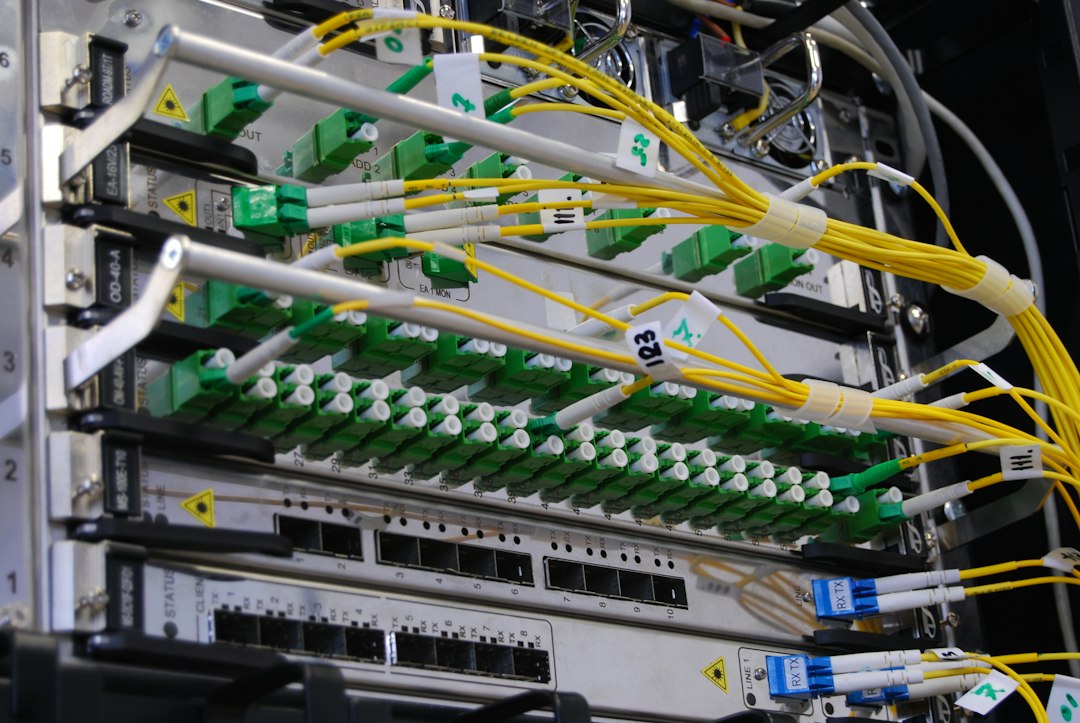
Traditional WAN, most commonly implemented using Multi-Protocol Label Switching (MPLS), has been the backbone of enterprise connectivity for over two decades. MPLS routes data packets using predefined label paths rather than complex routing table lookups, delivering predictable performance and guaranteed Quality of Service (QoS). Enterprises relied on MPLS to connect branch offices, data centers, and headquarters with reliable, low-latency private links backed by carrier SLAs.
However, traditional WAN was designed in an era when most applications lived in private data centers, not the cloud. As enterprises shift workloads to AWS, Azure, and Google Cloud, backhauling all traffic through central data centers — the classic MPLS hub-and-spoke model — introduces latency, increases bandwidth costs, and creates performance bottlenecks that frustrate users. Despite these limitations, MPLS remains in active use in sectors like banking, healthcare, and manufacturing, where compliance requirements, deterministic performance, and substantial existing infrastructure investments still justify the ongoing expense.
What Is SD-WAN?
Software-Defined WAN decouples the network control plane from the data plane, allowing administrators to manage WAN connections across MPLS, broadband internet, 4G/5G, and other transport types through a centralized software controller. Rather than manually configuring each individual router at each branch location, IT teams define traffic policies once and push them network-wide from a single management dashboard.
SD-WAN's core strengths include application-aware routing — the ability to steer critical traffic such as video conferencing, ERP systems, or VoIP over the most performant available link in real time — combined with significant cost savings by supplementing or replacing expensive MPLS circuits with cheaper broadband connections. For organizations operating many branch offices or remote sites, SD-WAN delivers agility, granular visibility, and operational efficiency that traditional WAN cannot match. Leading vendors in this space include Cisco Viptela, VMware VeloCloud, Fortinet FortiGate SD-WAN, and Palo Alto Prisma SD-WAN.
What Is SASE?
Coined by Gartner in 2019, Secure Access Service Edge (SASE) represents a convergence of wide-area networking and comprehensive network security into a single cloud-delivered service. SASE bundles SD-WAN capabilities with security functions such as Cloud Access Security Broker (CASB), Secure Web Gateway (SWG), Zero Trust Network Access (ZTNA), and Firewall-as-a-Service (FWaaS) into a unified, cloud-native platform delivered from globally distributed points of presence.
The SASE model is a direct response to the reality of the modern enterprise: users are everywhere, applications live in the cloud, and the traditional network perimeter has effectively dissolved. Rather than routing all traffic through a central security stack, SASE applies security policies at the cloud edge, as close to the user as possible. This approach dramatically reduces latency for remote and hybrid workers while ensuring consistent security enforcement regardless of where a user, device, or application is located. Major SASE providers include Zscaler, Cloudflare, Netskope, and Cisco Umbrella.
Head-to-Head Comparison: Performance, Cost, Security, and Cloud Readiness
Performance and Reliability
Traditional WAN with MPLS delivers the most deterministic performance for latency-sensitive applications running within private data centers. Its SLA-backed guarantees make it the preferred choice for real-time financial transactions, industrial control systems, and legacy ERP applications that cannot tolerate variable latency. However, this performance advantage diminishes significantly when users need to access cloud-hosted applications, as backhauling internet-bound traffic through a central data center introduces unnecessary delay that compounds as cloud adoption grows.
SD-WAN matches or surpasses MPLS performance for most modern workloads by dynamically selecting the best available path in real time and applying intelligent QoS policies per application. SASE extends this further by moving security processing to distributed cloud PoPs, ensuring genuinely low-latency access to SaaS applications like Microsoft 365, Salesforce, and Zoom from virtually anywhere on the planet.
Cost and Scalability
MPLS circuits are significantly more expensive than broadband internet connections — often five to ten times more per Mbps — and provisioning a new site can take weeks or months due to carrier lead times. SD-WAN allows organizations to replace or supplement MPLS with commodity broadband, with industry reports consistently citing WAN cost reductions of 30 to 70 percent following SD-WAN deployments. SASE consolidates multiple point security products — standalone firewalls, web proxies, VPN concentrators, DLP appliances — into a single subscription, reducing licensing complexity and total cost of ownership, though initial migration and change management costs require careful planning.
Security Architecture
Traditional WAN security relies on perimeter-based models: firewalls and intrusion detection systems guard the data center edge, but once traffic is inside the network, lateral movement is relatively unrestricted. This castle-and-moat model is poorly suited to today's threat landscape, where credential theft and insider threats make perimeter trust fundamentally dangerous. SD-WAN improves on this with integrated next-generation firewall capabilities at the branch level and encrypted overlays, but security remains a secondary feature for most pure-play SD-WAN vendors.
SASE was architected with security as its primary value proposition, embedding Zero Trust principles throughout every connection. Every user, device, and application must continuously authenticate and be authorized before accessing any resource — there is no implicit trust based on network location. This model represents the direction mandated by enterprise security frameworks, government cybersecurity directives, and industry compliance standards entering 2026.
Cloud and Hybrid Work Readiness
Traditional WAN was not designed for direct cloud connectivity and requires significant architectural redesign to support multi-cloud strategies efficiently. SD-WAN provides native cloud on-ramps and direct-to-internet breakout capabilities, making it vastly superior for hybrid cloud environments where applications are distributed across AWS, Azure, and Google Cloud simultaneously. SASE is entirely cloud-native and delivers seamless, secure access to any cloud resource from any location — arguably the most cloud-ready and hybrid-work-ready architecture of the three, particularly for organizations where the majority of users work outside a traditional office.
Industry Adoption and Job Market Trends in 2026
The market numbers tell a compelling story for IT professionals deciding where to focus their learning. The global SD-WAN market, valued at approximately 5.1 billion USD in 2023, is projected to exceed 14 billion USD by 2028, driven by enterprise digital transformation, the proliferation of distributed branch offices, and the ongoing shift away from MPLS. Meanwhile, the SASE market is growing even faster, with analysts projecting a compound annual growth rate exceeding 35 percent through 2027 as organizations prioritize converged networking and security architectures.
Job postings for SD-WAN engineers and SASE architects have increased significantly year-over-year. Network engineers with expertise in traditional WAN alone are seeing declining demand in greenfield deployments, though migration expertise — helping enterprises transition from legacy MPLS environments to modern SD-WAN or SASE architectures — commands significant consulting premiums in the interim. Enterprises across every vertical are actively transforming their WAN infrastructure: retail chains deploy SD-WAN to connect hundreds of stores cost-effectively, financial institutions evaluate SASE to meet Zero Trust mandates from regulators, and healthcare networks adopt SD-WAN to support telemedicine platforms and cloud-based electronic health records.
Which Technology Should IT Professionals Learn in 2026?
Prioritize Traditional WAN Knowledge If...
You work in a regulated industry such as banking, government, or critical infrastructure where existing MPLS contracts run for several more years, or where compliance requirements mandate dedicated private circuits with guaranteed performance characteristics. Expertise in WAN optimization, QoS configuration, and MPLS traffic engineering remains valuable in complex migration projects and organizations with large legacy environments. This foundational knowledge also provides essential context for understanding the architectural decisions behind SD-WAN and the specific problems it was designed to solve.
Prioritize SD-WAN If...
You are a network engineer seeking the highest immediate return on your learning investment in terms of job market demand. SD-WAN skills are in strong demand across mid-market and enterprise organizations globally, with active hiring across technology, retail, logistics, and financial services sectors. If you already hold a Cisco CCNA or CCNP credential, extending that knowledge into Cisco Viptela SD-WAN or exploring vendor-neutral SD-WAN concepts adds immediate competitive differentiation. SD-WAN expertise also serves as an excellent stepping stone toward SASE specialization, since most SASE platforms incorporate SD-WAN as their connectivity foundation.
Prioritize SASE If...
You want to position yourself for the highest-growth, highest-compensation segment of the enterprise networking market over the next five years. SASE expertise sits at the intersection of networking and security — two of the most consistently in-demand skill domains across all of IT — and professionals who can architect, deploy, and govern SASE platforms at enterprise scale command salaries that reflect the genuine scarcity of this skill set. If you have a background in network security, Zero Trust architecture, cloud infrastructure, or identity management, the transition to SASE specialization is a natural and highly rewarding career progression.
Certifications That Align with Each Technology
Formal certifications accelerate career transitions and validate expertise to employers evaluating candidates for enterprise networking roles. For traditional WAN and SD-WAN, the Cisco CCNP Enterprise certification covers both legacy WAN technologies and SD-WAN fundamentals, making it one of the most versatile credentials available for network engineers in 2026. The Cisco SD-WAN Operations and Deployment training track provides deep hands-on knowledge for professionals specifically focused on Cisco's Viptela platform, while the Fortinet NSE certification path covers FortiGate SD-WAN for environments built around Fortinet's security fabric.
For SASE and Zero Trust, the CompTIA Security+ combined with vendor-specific credentials from Zscaler (ZCCA-IA, ZCCA-PA), Palo Alto Networks Prisma SASE, or Cloudflare Zero Trust certifications provides a strong and market-recognized credential stack. Professionals targeting cloud-integrated enterprise networking should also consider pairing networking certifications with cloud credentials such as the AWS Advanced Networking Specialty or the Microsoft Azure Network Engineer Associate, as hybrid cloud connectivity is inseparable from modern SD-WAN and SASE deployments. ProgNXT's Telecom and Networking training programs cover this full certification landscape with updated curriculum mapped to current enterprise deployment scenarios.
Building a Future-Proof Networking Career Path
The most strategically positioned networking professionals in 2026 are not treating SD-WAN, Traditional WAN, and SASE as mutually exclusive choices. They are building layered expertise: deep knowledge of traditional WAN provides the architectural foundation, SD-WAN skills deliver immediate employability and practical project experience that opens doors, and SASE expertise positions them for senior architecture and leadership roles in the converged network-security future that every major enterprise is now actively building toward.
Organizations do not replace their entire WAN infrastructure overnight. Most enterprise networking transformation projects involve hybrid environments — MPLS running in parallel with SD-WAN at some sites, SASE deployed for remote and hybrid users while branch connectivity is progressively modernized — requiring professionals who understand all three paradigms fluently and can architect pragmatic, phased migration paths. The engineer who can walk into an enterprise network review and speak credibly across legacy MPLS optimization, SD-WAN policy design, and SASE Zero Trust architecture will consistently be valued above specialists with narrower knowledge.
Conclusion
For IT professionals evaluating where to focus their networking education in 2026, the strategic path is clear. SD-WAN offers the strongest combination of immediate job market demand and practical project applicability across a wide range of enterprise environments. SASE represents the highest-growth, highest-compensation specialization for professionals ready to invest in security-converged networking expertise at the cutting edge of the industry. Traditional WAN knowledge remains a valuable and marketable foundation, particularly for migration consulting and roles within regulated industries. By developing a layered skill set that spans all three paradigms — supported by industry-recognized certifications and hands-on training delivered by experienced practitioners — network engineers can build careers that are resilient to technological change and genuinely sought after by the enterprises navigating their own digital network transformations in 2026 and beyond.