
How to Choose the Best IT Training Organization: Classroom vs. Online Learning

You have $20,000 in training budget, ten engineers who need cloud certifications by Q3, and a spreadsheet full of providers that all look identical on their landing pages.
Half your team wants the flexibility of online courses they can fit around sprint cycles. The other half admits they have never actually finished a self-paced course in their life. Sound familiar?
The real question here is not "classroom or online" but "which format will my team actually complete and retain?" And that distinction matters more than most people think.
Instructor-led training programs, whether classroom or live virtual, consistently show completion rates between 60-85%. Self-paced online courses average 5-15%. The format you choose directly determines whether your training budget produces skills or just receipts.
This article breaks down what classroom and online IT training actually look like in 2026, when each format is worth the investment, red flags to watch for when evaluating any provider, how to make the decision when upskilling an entire team, and a clear framework for choosing what fits.
Providers likeProgNXT that offer both classroom and online formats with instructor-led options give teams the flexibility to match the format to the situation rather than forcing everyone into one mold.
What Does Classroom IT Training Actually Look Like in 2026?
Classroom IT training has evolved significantly. Modern programs run on live lab environments where learners build, break, and fix real systems during the session, not after it.
An instructor teaching AWS architecture will have the group spinning up VPCs and configuring load balancers in real time, catching misconfigurations as they happen and explaining why something failed in a way that a pre-recorded video never can.
That real-time adaptation based on where the group is struggling is what separates classroom from passive learning formats.
Peer collaboration happens naturally in this setting too. Learners solve problems together, ask questions out loud that benefit the whole room, and build professional connections that last well beyond the course itself.
Who Benefits Most from Classroom Training
The format works best for specific situations, and if any of these describe your team the decision gets easier:
Career switchers entering IT who need structured guidance and cannot afford to wander through self-paced content hoping they are learning the right things
Teams upskilling together where group pacing, shared exercises, and consistent progress tracking keep everyone moving at the same speed
Professionals learning complex hands-on skills like networking, cybersecurity, or cloud architecture where the gap between watching someone do it and doing it yourself is enormous
Chronic non-finishers who have tried self-paced courses multiple times and consistently drop off before completing them
The Real Cost of Classroom Training
Classroom programs carry a higher sticker price per person than self-paced online courses. But the honest comparison is cost per completion, not cost per enrollment.
If 8 out of 10 classroom learners finish versus 1 out of 10 self-paced learners, the effective cost per skilled employee tilts toward classroom even at double the upfront price.
Factor in travel, time away from work, and scheduling logistics for the full picture, but do not let the sticker price alone drive the decision.
What Does Online IT Training Actually Look Like in 2026?
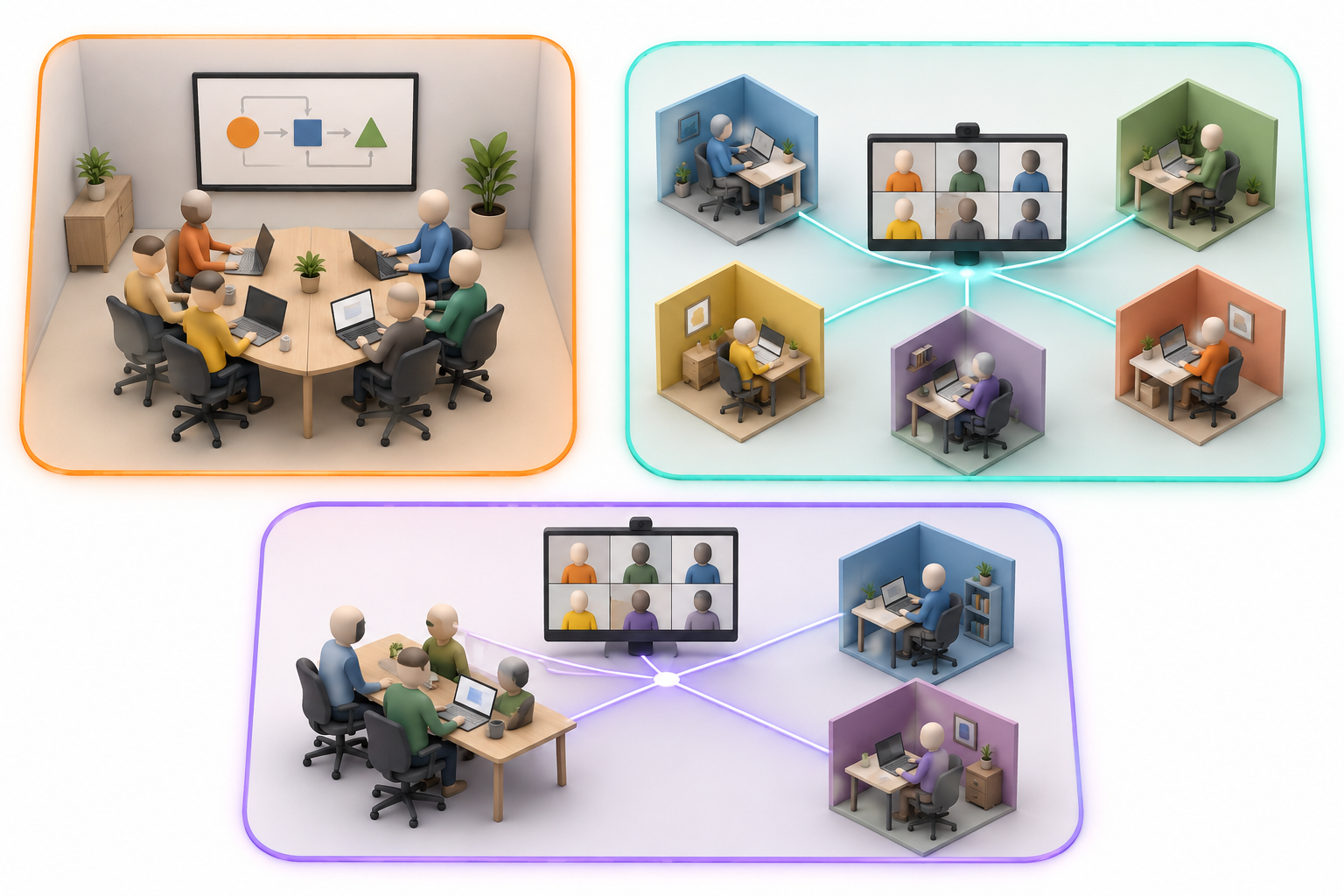
Online IT training spans a wide spectrum, and lumping it all into one category is where most people get the decision wrong. The experience varies dramatically depending on which format you choose:
Self-paced recorded courses offer the most flexibility and the lowest price point, but they also carry the lowest completion rates in the industry
Live virtual instructor-led training (VILT) runs on a fixed schedule with a real instructor over video, and completion rates track close to classroom programs
Cohort-based programs add structured timelines, peer groups, and deadlines that create accountability without requiring a physical classroom
Hybrid models blend async content with live sessions and hands-on labs, giving learners a mix of flexibility and structure
The format you pick within online training matters as much as the classroom vs. online decision itself. A VILT program and a self-paced video library are both "online" but the learning outcomes are worlds apart.
Who Benefits Most from Online Training
Different situations call for different online formats, but the broader category works well for these profiles:
Working Professionals with Limited Time Off
Classroom training means days away from the desk. If your team cannot afford that disruption, online formats (especially VILT or hybrid) deliver instructor-led quality on a schedule that fits around real work.
Distributed or Remote Teams
Getting fifteen people in one room when they are spread across three time zones is expensive and logistically painful. Online programs remove that barrier entirely.
Self-Motivated Certification Seekers
If someone has the discipline to follow through on self-paced content and just needs quality material with clear certification alignment, online self-paced programs can work well at a fraction of the classroom cost.
ProgNXT offers both live virtual instructor-led training and structured online programs, which gives teams the flexibility to match the format to the constraint, whether that is schedule, budget, or geography, without losing instructor access or hands-on practice.
How Do Classroom and Online Training Compare Side by Side?
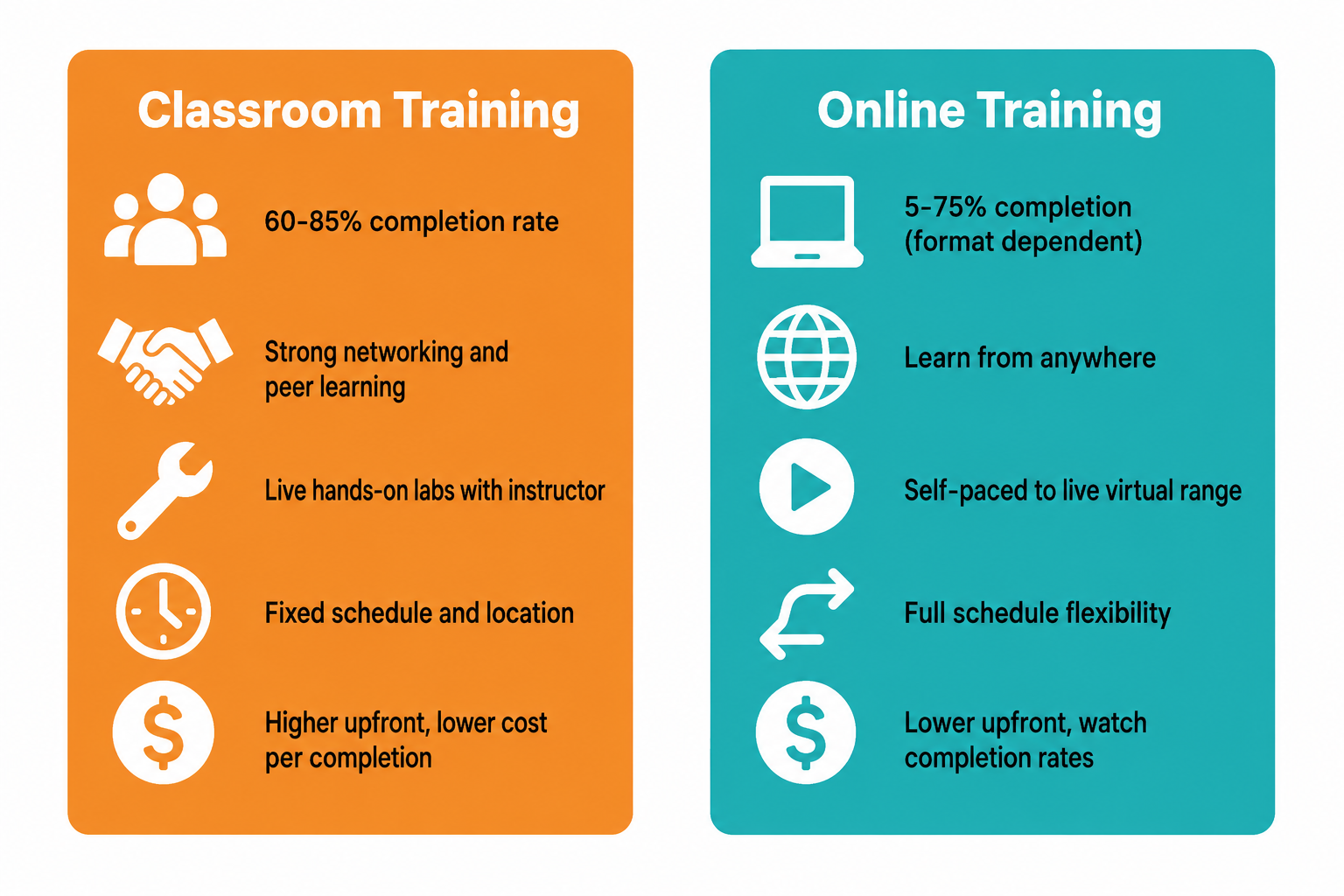
The right choice depends entirely on your situation, and seeing both formats next to each other across the dimensions that actually influence the decision makes the tradeoffs concrete.
The Completion Rate Reality
This is where the math changes minds. A $500 self-paced course with a 10% completion rate effectively costs $5,000 per person who actually finishes.
A $2,000 classroom program with an 80% completion rate costs $2,500 per skilled employee.
The option that looks cheaper on a purchase order is often the more expensive one on a balance sheet.
What Red Flags Should You Watch for When Evaluating Any It Training Provider?
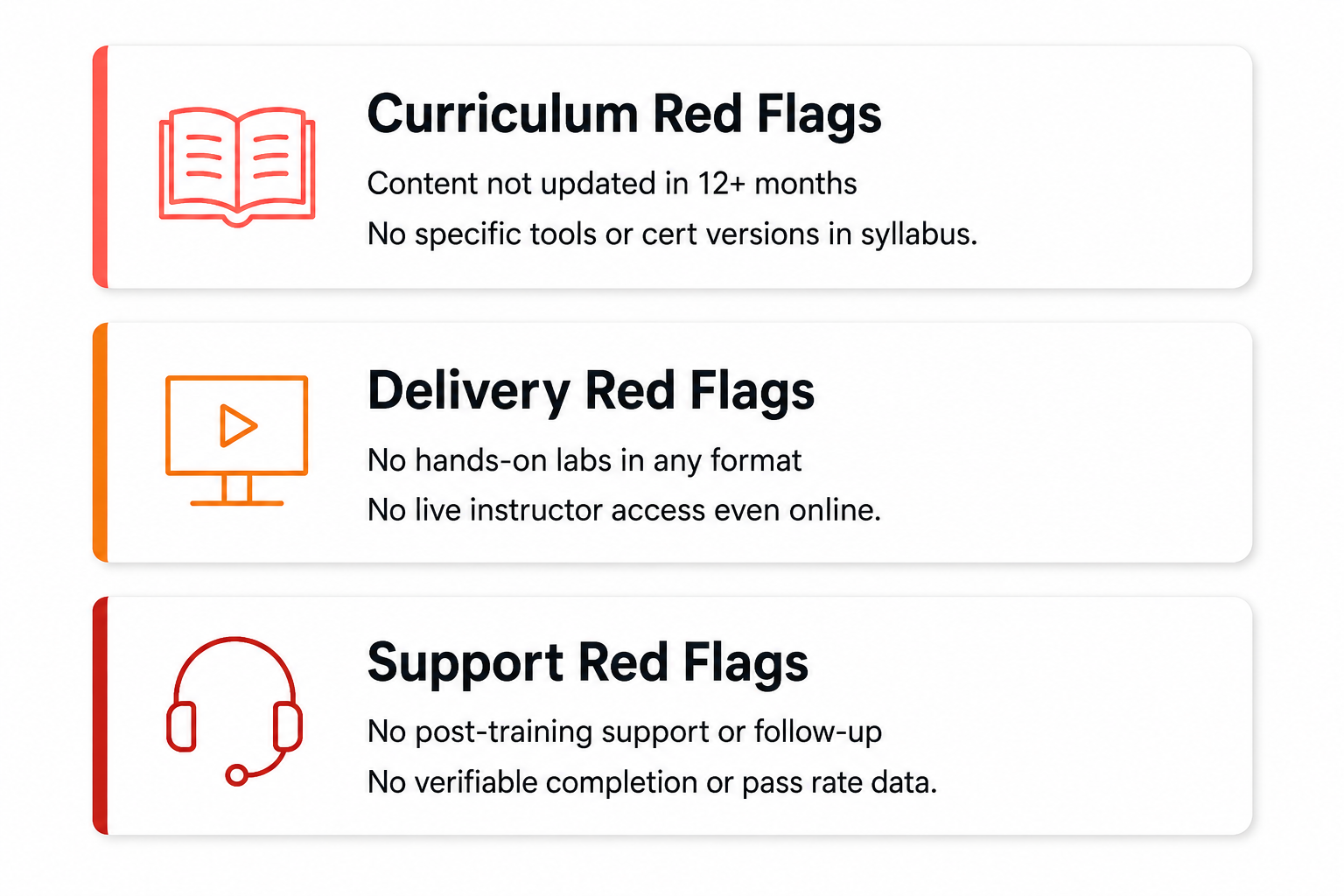
Regardless of whether you go classroom or online, these warning signs apply to every provider on your shortlist.
Curriculum Red Flags
Course content that has not been updated in the last 12 months is a problem, because technology moves too fast for stale material.
If the syllabus does not mention specific tools, platform versions, or certification exam codes, the curriculum is probably generic enough to have been written three years ago and never touched since.
Delivery Red Flags
No hands-on labs or practical exercises in any format. Slides and video walkthroughs alone do not build job-ready skills.
No live instructor access, even in online programs, means learners have nowhere to go when they hit a wall.
And no clear path from training to certification exam readiness suggests the program is designed for exposure, not outcomes.
Support Red Flags
No post-training support means learners are on their own the moment the course ends. No assessments or feedback during the program means nobody catches knowledge gaps before they compound.
And no verifiable data on completion rates or certification pass rates means you are trusting marketing copy instead of evidence.
ProgNXT addresses each of these with regularly updated curriculum, hands-on labs across all delivery formats, live instructor access, and post-training support.
How Do You Choose a Training Provider When Upskilling an Entire Team?
Team size changes the math in ways that individual learner comparisons miss:
Group economics: Classroom training becomes more cost-effective per person at 5+ learners, and many providers offer group rates that close the gap with online pricing entirely
Shared vocabulary: When 10 people go through the same program together, they walk out with shared frameworks, terminology, and reference points that accelerate collaboration the moment they are back on the job
Progress visibility: L&D managers and engineering leads need reporting on who completed what, assessment scores, and skill gap closure. Structured programs provide this. Self-paced courses usually do not.
Distributed Teams vs. Co-Located Teams
The provider you choose needs to flex across these scenarios, because most organizations have at least two of these team setups running at the same time.
ProgNXT's team training packages are built for exactly this: flexible delivery across classroom, VILT, and hybrid formats, group rates, progress tracking for managers, and curriculum that can be customized to the specific skill gaps your team needs to close.
What Actually Makes It Training Stick After the Course Ends?
Most training is forgotten within 30 days if there is no reinforcement, and the format matters far less than what happens during and after the program.
Four things drive retention regardless of whether the course is classroom or online:
Hands-on practice during the course itself, building real systems rather than watching someone else do it
Instructor accountability, someone who notices when you fall behind and pulls you back in
Peer learning, because explaining a concept to someone else solidifies it faster than reviewing notes alone
Post-training application, using the skills on real work within the first two weeks before the knowledge fades
Any provider offering only video content with no labs, no instructor interaction, and no follow-up is selling information.
Training is a different product entirely, and the four drivers above are how you tell the difference.
Conclusion
The classroom vs. online question matters less than most people think. What actually determines whether training produces results is instructor quality, hands-on practice, completion accountability, and post-training support. Choose classroom when your team needs structure and collaboration.
Choose online when flexibility and scale are priorities. Choose a provider that offers both so you are never forced into a format that does not fit.
Stop comparing landing pages and start comparing outcomes.Explore ProgNXT's training catalog to find classroom, live virtual, and hybrid programs built to produce skills your team actually retains and uses. Your training budget deserves a completion rate above 10%.